
Execute Real Code Inside Every
DevOps Workflow
Run Python, Bash, JavaScript, kubectl, Terraform, and AWS CLI commands as native workflow steps. Every execution spins up a fully isolated container no shared state, no side effects, no risk to your infrastructure. Inject secrets at runtime, snapshot state for debugging, and audit every execution.
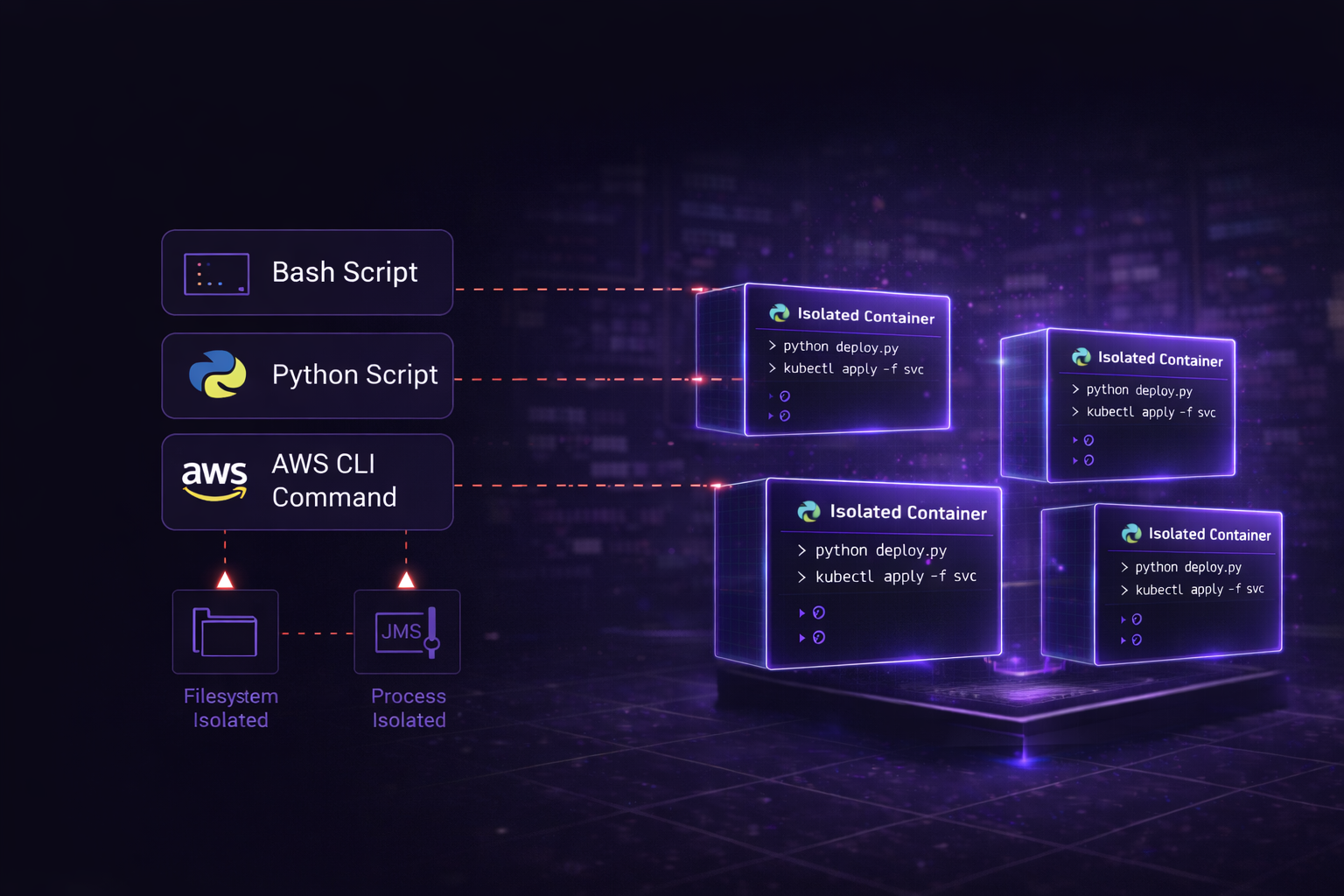
Code execution built into Every Workflow Step
From Python to kubectl, Write It, Run It, Ship It
Write your script in the language your team already uses. The sandbox supports full runtime environments not just syntax execution. Import libraries, connect to databases, call external APIs, and stream output in real-time. Every execution is logged, timed, and auditable.
1import asyncio, json, logging
2from dataclasses import dataclass, field
3from redis.asyncio import Redis
4
5@dataclass
6class Job:
7    name: str
8    payload: dict = field(default_factory=dict)
9    retries: int = 3
10
11async def run_job(job: Job, dlq: Redis) -> bool:
12    for attempt in range(job.retries):
13        try:
14            await execute(job.name, job.payload)
15            logging.info("✓ %s completed", job.name)
16            return True
17        except Exception as exc:
18            wait = 2 ** attempt          # exponential back-off
19            logging.warning("✗ %s attempt %d: %s — retry in %ds",
20                            job.name, attempt + 1, exc, wait)
21            await asyncio.sleep(wait)
22
23    # All retries exhausted → push to dead-letter queue
24    await dlq.lpush("dlq:failed_jobs", json.dumps(
25        {"job": job.name, "payload": job.payload}
26    ))
27    logging.error("💀 %s sent to DLQ after %d attempts", job.name, job.retries)
28    return False
29
30async def main():
31    dlq   = Redis.from_url("redis://localhost:6379")
32    jobs  = [Job("ingest"), Job("transform"), Job("export")]
33    results = await asyncio.gather(*[run_job(j, dlq) for j in jobs])
34    print(f"Completed {sum(results)}/{len(jobs)} jobs")
35
36asyncio.run(main())
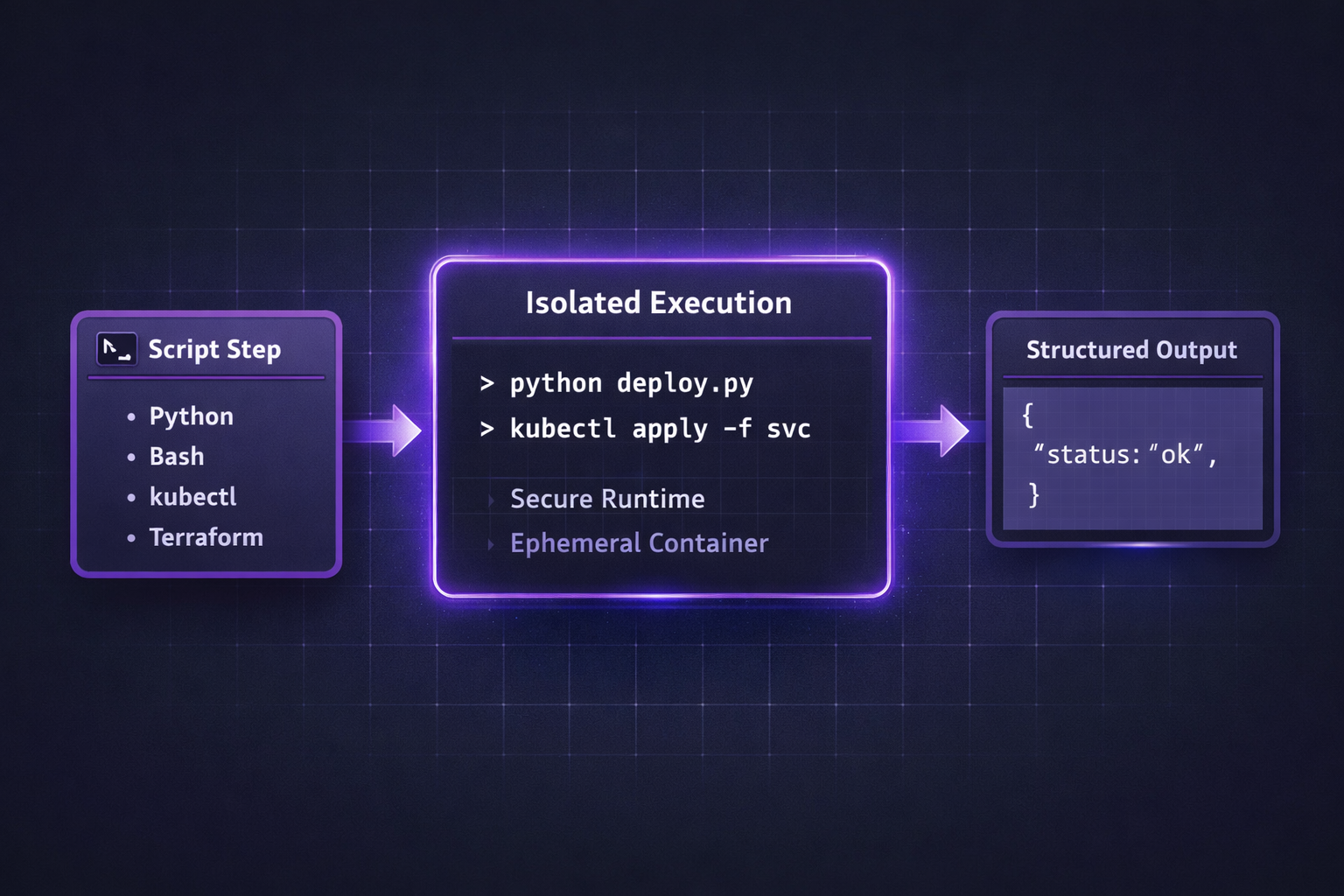
37Execute Scripts as Native Workflow Steps
Run Python, Bash, kubectl, Terraform, Helm, or AWS CLI commands as first-class activity nodes in any DevOps workflow. No external runners, no SSH sessions, no context switching. Your script receives input, executes in isolation, and passes structured output to the next step.
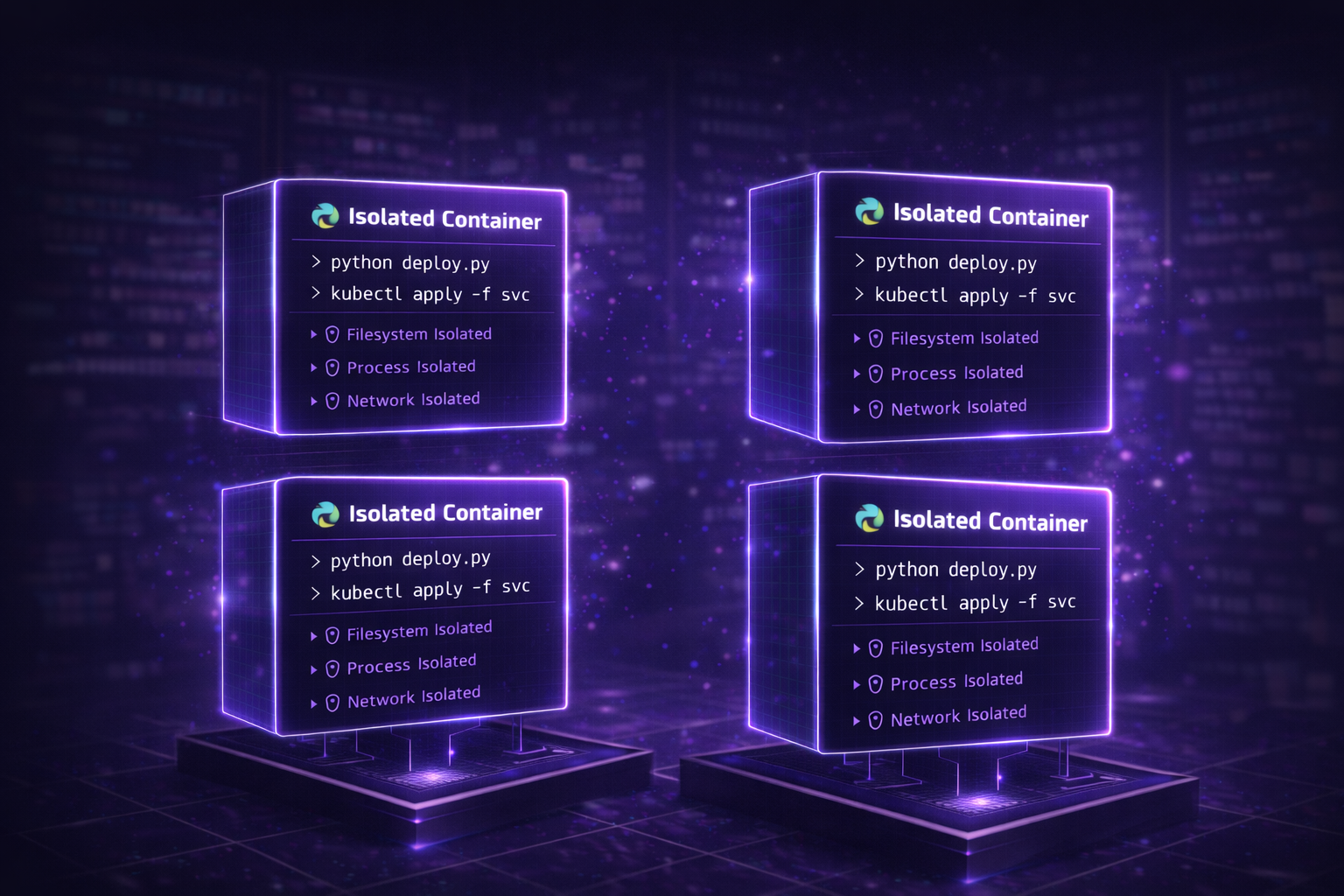
Fully Isolated Execution Every Time
Every sandbox spins up a dedicated container with its own filesystem, process space, and network context. No shared state between runs, no side effects leaking into production, no risk from a failed script impacting other workflows or infrastructure.
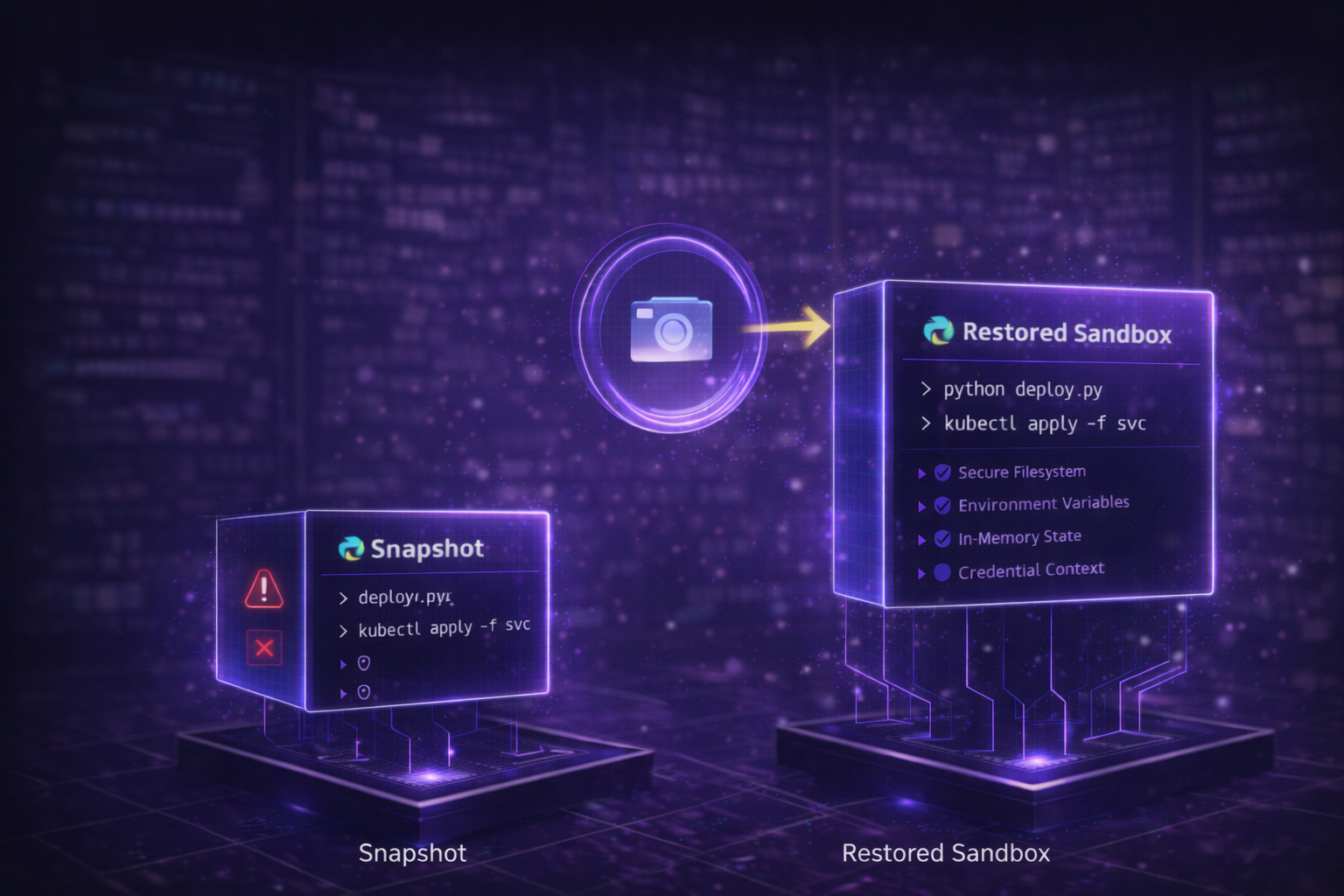
Debug Failures Without Starting Over
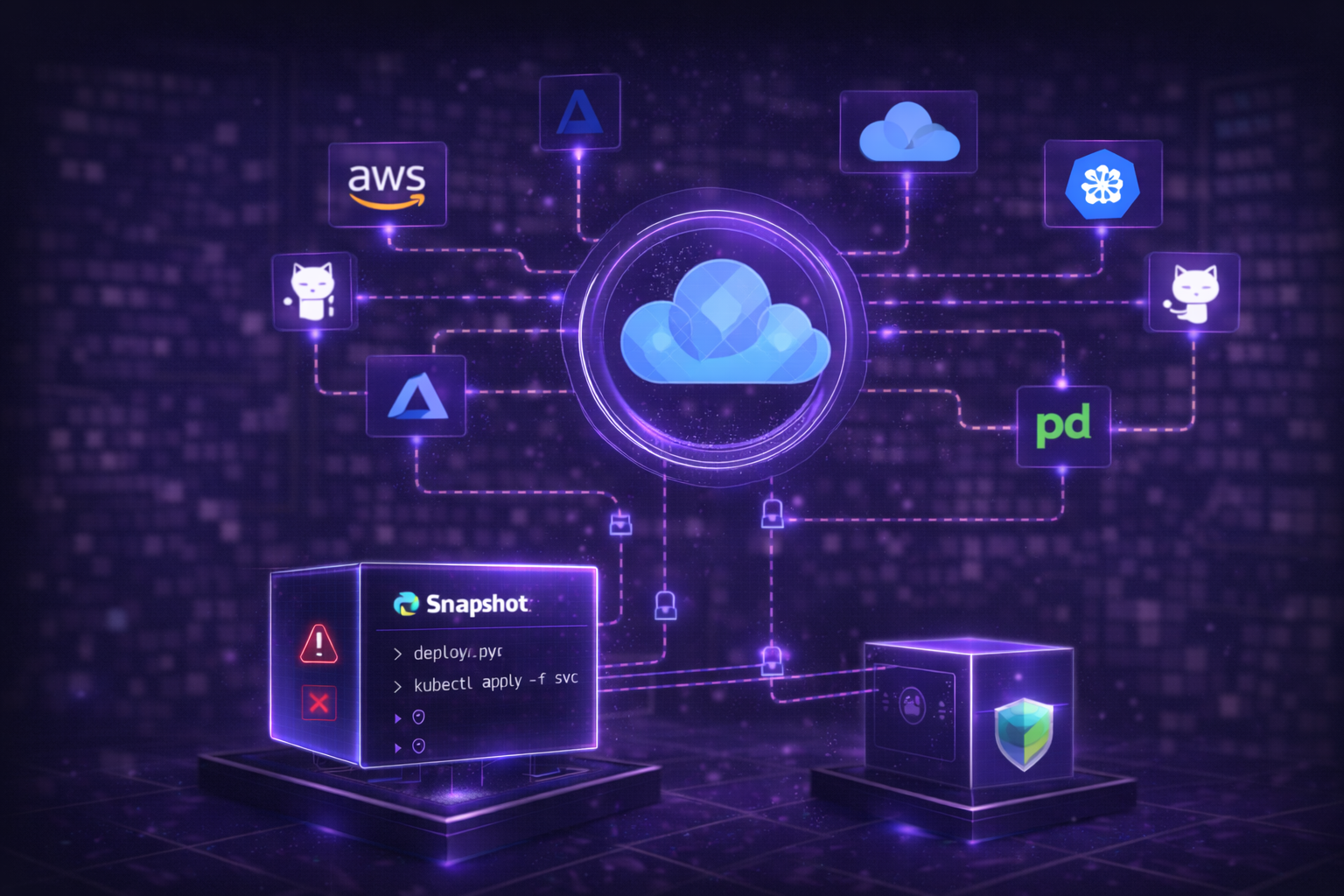
Save complete sandbox state including filesystem, memory, environment variables, and credential context at any point. Restore instantly to reproduce failures, debug edge cases, or replay a workflow from a known-good checkpoint.
Connected to Every Cloud API And Tool
Wire your sandbox to AWS, GCP, Azure, Kubernetes, GitHub, Datadog, PagerDuty, or any internal service. Credentials injected at runtime from the encrypted vault, never hardcoded in scripts, never exposed in logs.
Execute Code as Native Workflow Steps
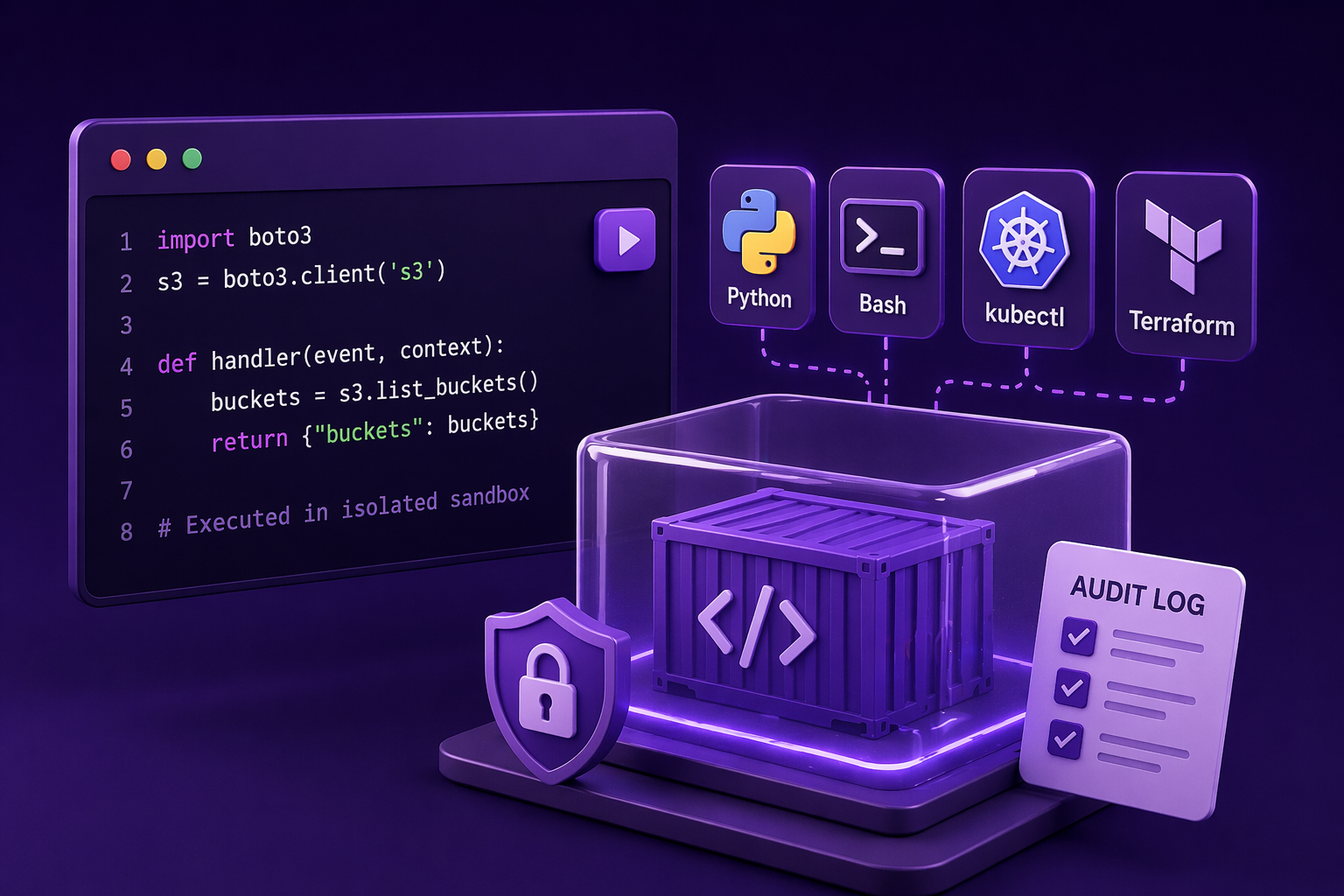
Run Python, Bash, kubectl, and Terraform inside isolated sandboxes as part of any DevOps workflow. Secrets injected at runtime, full audit logs on every execution.
Isolated Containers. Zero Side Effects.
Every sandbox execution spins up its own container. No shared state between runs, no risk to production infrastructure. Snapshot and restore any execution instantly.
Connected to Every Cloud, API, and Internal Tool
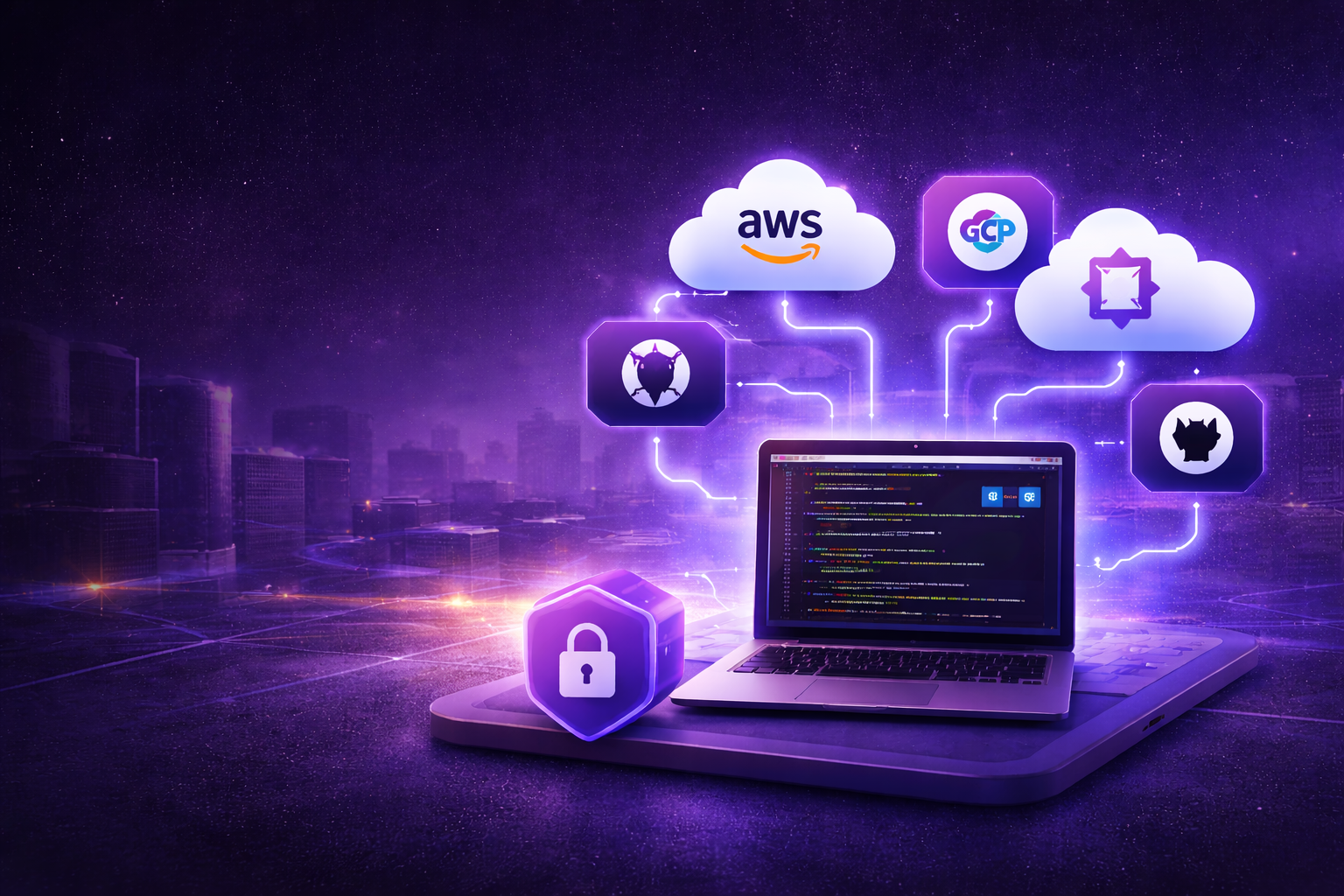
Wire your sandbox to AWS, GCP, Kubernetes, GitHub, Datadog, or any internal service. Credentials stored in an encrypted vault and injected at runtime, never hardcoded.